Peeling or Bubbling Garage Epoxy? Why It Failed and How to Fix It
Quick Answer: Peeling or bubbling garage epoxy almost always means the coating never bonded to the concrete the way it should have. The three usual causes are skipped or rushed surface prep, moisture moving up through the slab, and thin consumer-grade materials applied in the wrong conditions. Peeling tells you the coating is letting go of the surface, while bubbling tells you pressure is pushing it off from underneath. A lasting fix starts by removing the failed coating, grinding back to sound concrete, testing for moisture, and applying a system matched to how your garage gets used. Recoating over a floor that is already failing only buys a few months before the same problem returns.
You walk into the garage, flip on the light, and there it is: a sheet of coating curling up near the door, or a patch of soft blisters where the car usually parks. Maybe it started as one small chip and spread across the winter. A floor that looked sharp on install day now looks like it is shedding its skin. The good news is that this kind of failure is not random bad luck, and it is not something you did wrong by parking on it. Garage epoxy fails for specific, well understood reasons, and once you can read the signs, you can tell the difference between a floor that needs a patch and one that needs to come up and be redone correctly.
What Peeling and Bubbling Are Actually Telling You
A failing coating is a diagnostic clue, not just a cosmetic annoyance. The way it fails points straight at the reason.
Peeling means lost adhesion
When a coating lifts, curls, or comes up in sheets, the bond between the epoxy and the concrete has given out. The coating is no longer gripping the slab, so it is only a matter of time before the rest follows. This spreads faster than most people expect, because once one edge releases, foot traffic and tire heat pry at it every day.
Bubbling and blistering point to pressure from below
Small domes, soft spots, or fluid-filled blisters usually mean water vapor is rising through the concrete and pushing up against the underside of the coating. The slab looks dry to the touch, but it is still moving moisture, and that vapor has nowhere to go except into the weakest layer above it.
Flaking and chalking suggest a weak surface bond
When the top layer powders or flakes off in small chips rather than sheets, the coating often bonded to dust, laitance, or a previous finish instead of the raw concrete. The floor was compromised before the first coat ever cured.
The Number One Reason Coatings Fail: Skipped Surface Prep
If one cause outweighs all the others combined, this is it. Concrete needs to be clean, open, and mechanically roughened before any coating can lock into it. Skipping that step is a lot like painting over a dusty wall. It looks fine for a while, then it gives up.
Contamination left in the pores
Oil, grease, road salt, and old sealer sit in the surface of a garage slab even after a good sweep. If those contaminants are not pulled out, the coating bonds to the residue instead of the concrete, and residue does not hold.
No mechanical profile
Concrete should be diamond ground or shot blasted so the surface has tiny peaks and valleys for the coating to grab. Acid etching alone often falls short, especially on troweled, smooth, or previously sealed slabs. Without that profile, the coating simply rests on top.
Grinding dust not fully removed
Grinding opens the concrete, but it also creates a layer of fine dust. If that dust is not thoroughly vacuumed and cleaned, the new coating bonds to loose powder rather than solid slab, and the whole floor becomes a peel waiting to happen.
Coating applied over an old failure
Rolling fresh epoxy on top of flaking paint or a previous coating that is already lifting guarantees the new layer fails right along with the old one. The bond is only as strong as whatever sits underneath it.
TIP: Before you agree to any coating work, ask exactly how the installer plans to profile the slab. A clear answer about diamond grinding or shot blasting is a good sign. A vague answer about etching and a quick coat is a reason to keep looking.
Moisture and Vapor: The Problem You Cannot See
Concrete is porous, which means it holds and moves water even when the surface feels bone dry. This is the failure that catches homeowners off guard, because nothing looks wet.
Moisture vapor transmission
Ground moisture rises through the slab as vapor and builds pressure under the coating. Over weeks and months, that pressure lifts the film and forms blisters or wide areas of peeling that have nothing to do with how the top was cleaned.
Coating over damp concrete
Pressure washing a garage the day before an install, or coating a slab that never fully dried after wet weather, traps moisture inside. The coating cures over a reservoir of water that has to escape somewhere.
High humidity during the cure
When a coating sets in muggy conditions, condensation can form on the concrete surface and weaken the bond at the exact moment it is trying to form. Timing the work to the weather matters more than most people realize.
Hot Tire Pickup and DIY Kit Failures
Even a reasonably clean floor can fail if the material and the conditions were wrong from the start.
Hot tire pickup
Warm tires soften thin or low-quality coatings, and as the tire cools it grips the film and pulls it off the slab in tire-shaped patches. This shows up most on water-based big-box kits that never had the bond strength to resist it.
Thin, filler-heavy resins
Consumer kits often stretch the coating with fillers instead of durable resin, so the finished film is thin and brittle. It scratches, chips, and peels far sooner than a professional-grade build.
Improper mix ratios
Two-part coatings depend on precise measurement. Guessing at the ratio or rushing the mix leaves soft spots that never fully harden and become the first places to fail.
Driving on it too soon
A coating needs time to reach full strength. Parking a car on a floor that has not finished curing shears the bond before it sets and invites peeling right where the tires land.
WARNING: Recoating a failing garage floor without removing the old coating and fixing the root cause is the most common way good money gets wasted. If moisture or contamination caused the first failure, a fresh coat on top will lift for the very same reason, usually within a season.
How to Diagnose Your Failing Floor
Before deciding on a fix, figure out what actually went wrong. A short inspection tells you most of what you need.
Run a simple tape test
Press a strip of strong tape firmly onto a suspect area and pull it up quickly. If flakes of coating come with it, adhesion is already compromised well beyond the visible damage.
Check for hidden moisture
Tape a square of plastic sheeting tightly to a clean section of the floor and leave it for a day or two. Condensation or a dark patch underneath signals that vapor is moving through the slab and points toward a moisture-driven failure.
Map the pattern
Tire-shaped lifts suggest hot tire pickup. Random blisters across the floor suggest vapor pressure. Peeling that starts at doorways and edges often points to prep and contamination. The pattern narrows the cause quickly.
Look closely at the edges
Peel back a loose section and study the back of the coating. Concrete dust or a smooth, clean underside means it never truly bonded, which confirms a prep problem rather than a materials problem.
How a Failed Garage Epoxy Floor Gets Fixed
A real repair treats the cause, not the symptom. Spot patches on a floor with a systemic problem only delay the next failure.
Full removal of the failed coating
The loose and lifting material has to come off, and in many cases the entire coating is removed rather than feathered into good areas. A fix that starts on a compromised surface inherits its weakness.
Grinding back to sound concrete
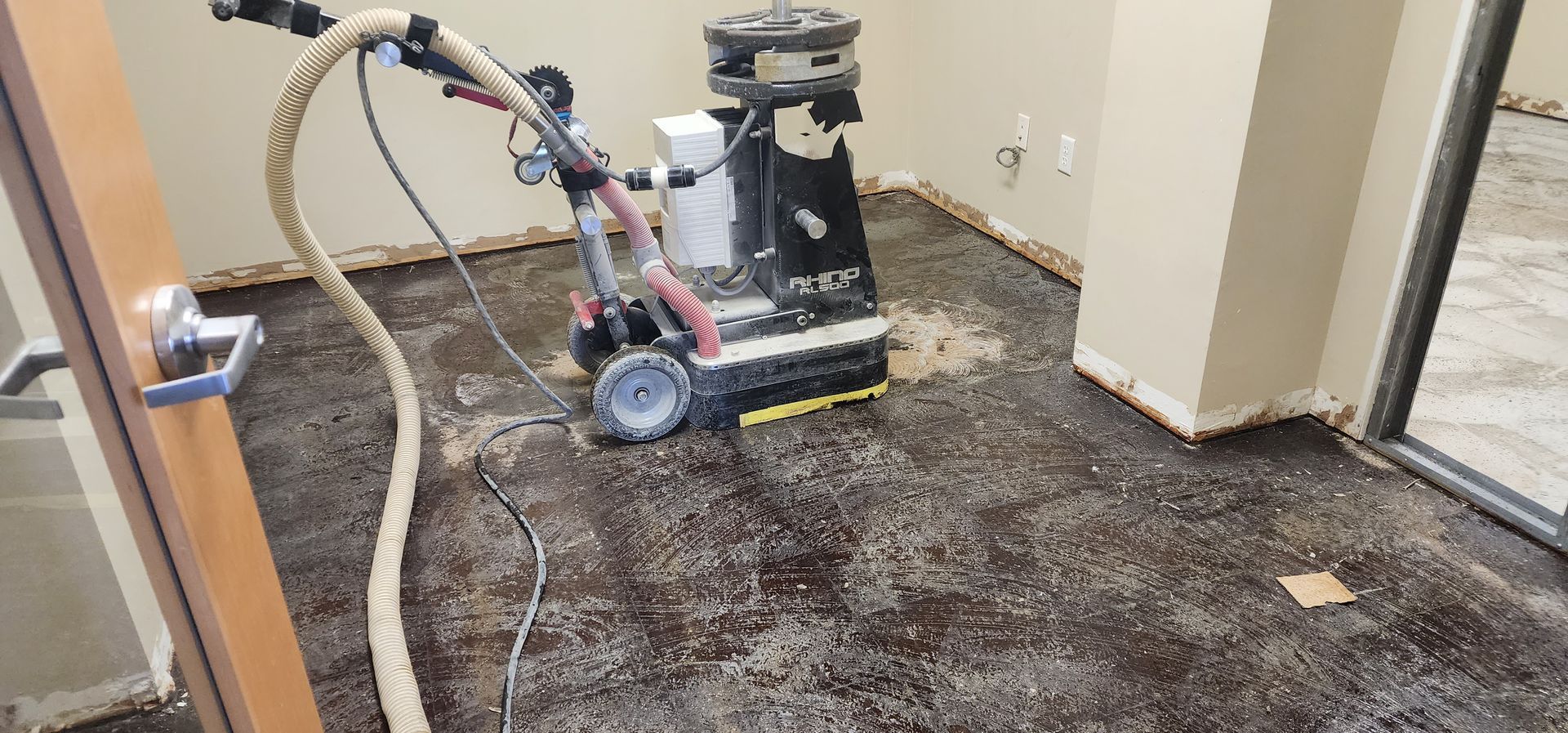
Diamond grinding takes the floor down to clean, open slab and creates the mechanical profile the original job likely lacked. This is the single step that separates a coating that lasts from one that peels.
Moisture testing and mitigation
The bare slab is tested for moisture, and when readings run high, a vapor barrier or moisture-tolerant primer is applied before anything else. Managing vapor is what keeps blisters from coming back.
Repairing cracks, pits, and spalls
Damaged concrete, popped edges, and open cracks are filled and leveled so the new system has a solid, continuous base. Coating over unrepaired damage just highlights it later.
Matching the coating to the garage
The right system depends on how the space is used, how much moisture the slab carries, and whether the floor sees vehicles, heavy tools, or foot traffic. A garage that parks daily drivers has different needs than a workshop or a showroom, and the coating build should reflect that.
Frequently Asked Questions
Can I just recoat over my peeling epoxy?
Usually not with lasting results. If the coating is peeling, the surface underneath is already failing, so a new coat bonds to that failing layer. The reliable path is grinding to sound slab, then recoating fresh.
Why is my epoxy bubbling but not peeling yet?
Bubbling alone is often an early moisture signal. Vapor rising through the slab collects under the coating, forming domes before the bond releases. Left alone, those blisters usually progress into peeling. Moisture testing confirms the driver.
Does humidity in Western North Carolina really affect epoxy?
It can, and it deserves serious attention. Damp seasons, mountain humidity, and slabs against cool ground keep concrete carrying moisture, raising the risk of vapor-driven blistering. That is why moisture testing and, when needed, vapor barriers matter.
Is hot tire pickup a sign of a bad installer?
Often it points to thin materials, weak prep, or both. Professional coatings over a properly ground slab resist warm tires far better than water-based kits. Coating lifting in tire-shaped patches signals material and prep problems first.
How do I know if moisture or prep caused the failure?
The failure pattern and a quick test usually tell the story. Widespread blisters and dampness under taped plastic point to moisture; edge peeling with dust behind the coating points to prep. Many failures involve both together.
How long should a properly installed garage floor last?
A floor built on correct preparation and matched materials should last many years of normal use rather than failing within a season. The difference comes down to grinding, moisture management, and coating quality, not luck at all.
Getting a Garage Floor That Stays Put
A coating is only as good as the concrete beneath it, and the reasons floors peel or bubble come down to a bond that was never given a fair chance to form. Grinding, moisture testing, and the right system for your slab are what turn a short-lived finish into one that lasts.
A garage floor stays sharp and firmly bonded only when the concrete under it was ground, tested, and prepared the right way, and that is exactly where lasting results are won or lost. Iconic. Co LLC diagnoses why your current floor peeled or bubbled, corrects moisture and profile problems at the source, and installs a coating matched to your slab and how you actually use the space. With more than 20 years of experience across Asheville, North Carolina, and hands-on
expertise in epoxy, polished, and stained systems, the team builds floors meant to hold up. Schedule your consultation to start with a garage floor that was prepped right from the ground up.