Epoxy vs Polyaspartic Garage Floor Coatings: What's the Difference
Quick Answer: Epoxy and polyaspartic are both resin-based coatings used to protect and finish concrete floors, but they behave very differently once they're down. Epoxy cures slowly, bonds deeply into the surface profile of the concrete, and holds up well as a base layer. Polyaspartic cures in a fraction of the time, resists UV yellowing and hot tire pickup better, and is often used as the tough, glossy topcoat over an epoxy base. For most Asheville-area garages, the strongest, longest-lasting result comes from combining the two rather than picking a single product and hoping it does everything.
Two Different Chemistries, Two Different Jobs
Epoxy and polyaspartic are both categorized as concrete coatings, and both get compared constantly in garage-flooring conversations, but they're built from different chemistry and they solve different problems on a slab.
What Epoxy Does Well
Epoxy is a two-part resin that reacts slowly compared to most modern coatings. That slow reaction is actually its strength: it gives the material time to soak into the pores and profile of a properly ground concrete surface before it sets up. The result is a mechanical bond that's hard to beat for adhesion, which is exactly why epoxy is still the standard choice for a base coat under almost every high-performance garage floor system.
Epoxy is also unaffected by humidity while it cures, which matters more than people expect in a region with the kind of moisture swings Western North Carolina sees through spring and summer. A coating that's sensitive to ambient humidity can behave unpredictably on a muggy August afternoon in Asheville; straight epoxy doesn't have that problem.
Where epoxy falls short is in the long-term cosmetic department. Clear epoxy tends to amber or yellow with sustained UV exposure, which shows up in garages with windows, skylights, or a door that stays open through the day. It's also more rigid than polyaspartic, so it can be more prone to fine scratching from foot traffic, dropped tools, or the edge of a bike kickstand over the years.
What Polyaspartic Does Well
Polyaspartic is a newer aliphatic polyurea chemistry that cures fast — often within a couple of hours rather than a couple of days. That speed is a genuine advantage for anyone who can't have a garage out of commission for a week, and it's part of why polyaspartic has become the go-to topcoat for finished garage floors.
Polyaspartic resists UV rays far better than epoxy, so it stays clear and glossy instead of yellowing. It also holds up better against hot tire pickup, the phenomenon where a warm tire softens and lifts a coating as a car sits parked after a drive. Because it's more flexible than epoxy, it tolerates the natural expansion and contraction of a concrete slab without cracking as readily, and it typically resists chemical splashes — oil, antifreeze, deicing salt — a bit more aggressively too.
The tradeoff is that polyaspartic's fast cure time is a double-edged sword during installation. It hardens quickly in warm, humid conditions, which shortens the working window a crew has to apply it correctly and get full penetration into the concrete. That's a detail that matters more to your installer than to you, but it's part of why polyaspartic isn't usually asked to do the adhesion work on its own — it performs best layered over a properly bonded epoxy base rather than applied directly as the only coating on raw concrete.
Why Most Garage Floors Use Both
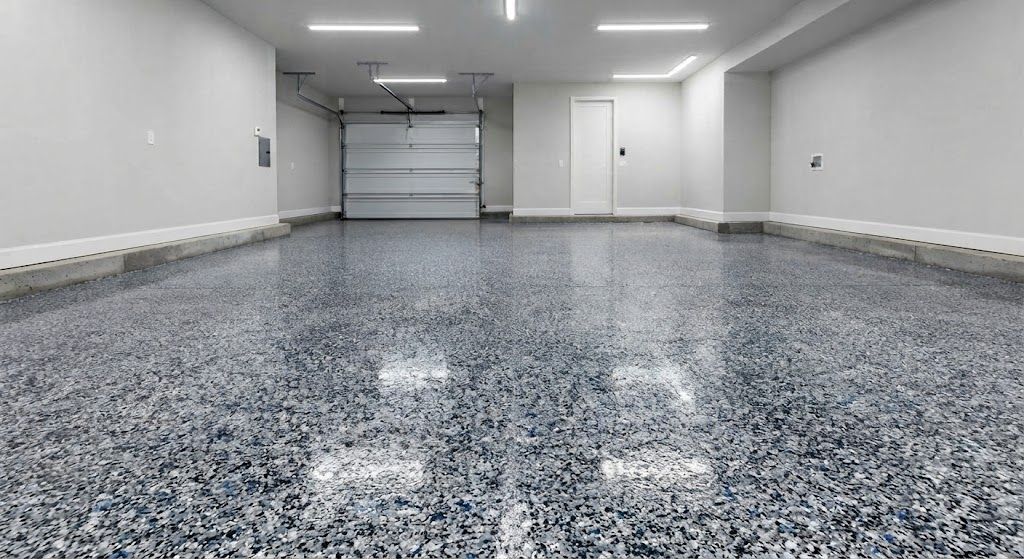
The floors that hold up the longest in Asheville garages, shops, and basements typically aren't epoxy-only or polyaspartic-only. They're layered systems: an epoxy base coat that grips the ground concrete and does the heavy structural bonding, topped with a polyaspartic finish coat that brings the UV stability, scratch resistance, and fast cure that epoxy alone can't offer.
Think of it as division of labor. Epoxy's job is to disappear into the slab and never let go. Polyaspartic's job is to sit on top, take the abuse of daily foot and tire traffic, and stay clear and glossy for years instead of yellowing after one summer of sun through the garage windows. Asking either product to do both jobs by itself usually means giving something up — either adhesion or long-term appearance.
TIP: If UV exposure is a real factor for your garage — south-facing windows, a door that's open most of the day, or a carport-style layout with no roof shading — prioritize a polyaspartic topcoat even if it adds a step to the process. It's the layer that determines whether your floor still looks new in five years or has already started amber-shifting at the edges.
What This Means for Your Slab
Before any coating conversation matters, the concrete underneath has to be ready. Neither epoxy nor polyaspartic will perform to spec over a slab with residual sealers, oil staining, efflorescence, or moisture vapor coming up from below. That's true regardless of which chemistry you choose — the coating is only as good as the prep work underneath it.
Surface Prep Comes First
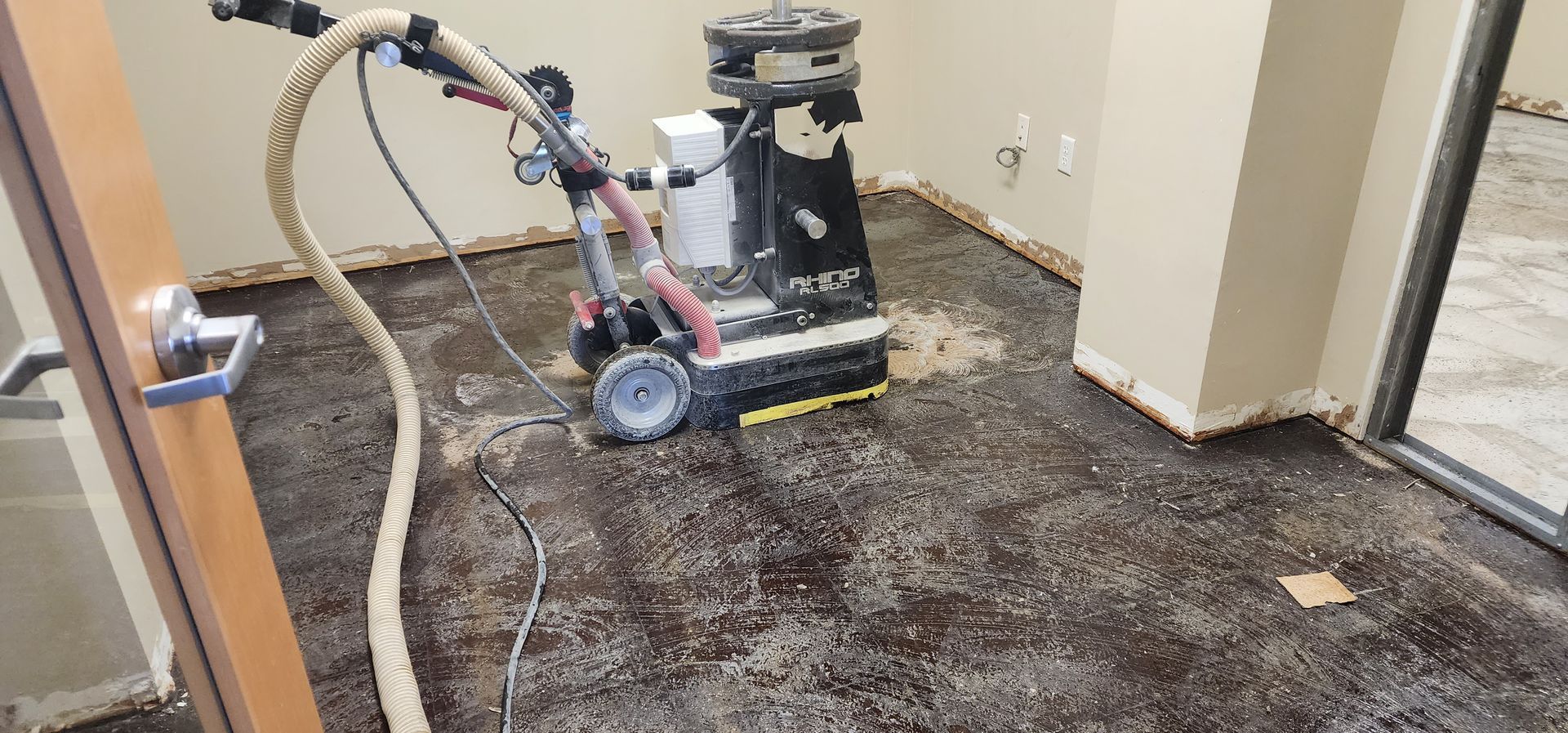
A slab that's going to hold a coating system needs to be mechanically profiled, usually through diamond grinding, to open up the surface enough for either resin to bond. Sealers, curing compounds, and old paint have to come off entirely, not just get scuffed. Cracks, pits, or spalled sections need to be patched and leveled before any base coat goes down, because a coating will telegraph — and eventually fail along — any flaw left in the concrete beneath it.
Ambient Conditions During Installation
Because epoxy and polyaspartic react to temperature and humidity differently, timing the installation around Western North Carolina's weather matters. A muggy late-summer day, a chilly early-spring morning, or a garage with poor ventilation can all change how these coatings set. An experienced installer adjusts the mix ratios, working time, and layering schedule to the conditions on the day of application rather than following a generic script.
Vehicle and Foot Traffic Loads
A garage that parks two daily-driver vehicles and sees regular foot traffic from a workshop or storage area puts more cumulative stress on a coating than a garage used occasionally for a single car. Heavier, more frequent use is a strong argument for the layered epoxy-plus-polyaspartic approach, since the added scratch and hot-tire resistance pays off faster under real wear.
Basements, Shops, and Commercial Spaces
The epoxy-versus-polyaspartic question doesn't stay confined to garages. Basements deal with their own moisture concerns and benefit from a system that resists vapor transmission from below while still looking finished. Home and commercial shops that run heavier equipment or see chemical exposure from solvents, oils, or cleaning agents often lean harder on polyaspartic's chemical resistance for the top layer. Commercial kitchens, showrooms, and retail floors add slip resistance and appearance requirements into the mix, which is where texture additives and gloss-level choices come into play alongside the base chemistry decision.
WARNING: Skipping proper moisture testing on a basement or below-grade slab before coating is one of the most common causes of coating failure — bubbling, delamination, or a milky haze under the finish. If there's any history of dampness, standing water, or a musty smell in the space, that testing needs to happen before a single coat goes down, not after problems show up.
Making the Call for Your Floor
If you're weighing epoxy against polyaspartic for a single garage floor, a few questions tend to settle it:
How much sun does the space get? More direct light pushes toward prioritizing a polyaspartic topcoat to avoid yellowing.
How fast do you need the garage back in use? Polyaspartic's rapid cure is the clear advantage if downtime is tight.
What's parked or stored there? Daily vehicle traffic, especially with warm tires sitting after a drive, favors polyaspartic's hot-tire resistance in the top layer.
What condition is the slab in right now? Heavier cracking, staining, or moisture issues shift the priority toward prep and an epoxy base that can handle deep bonding before finish coats even enter the conversation.
In nearly every case, the honest answer isn't "epoxy or polyaspartic" — it's how the two are layered together and how well the concrete underneath was prepared before either one went down. A coating system is only as strong as its weakest step, and that's almost always the prep, not the topcoat brand.
Appearance Options and Long-Term Maintenance
The chemistry question shapes durability, but it also shapes what the finished floor looks like and how much upkeep it needs over the years.
Flake, Metallic, and Solid Color Systems
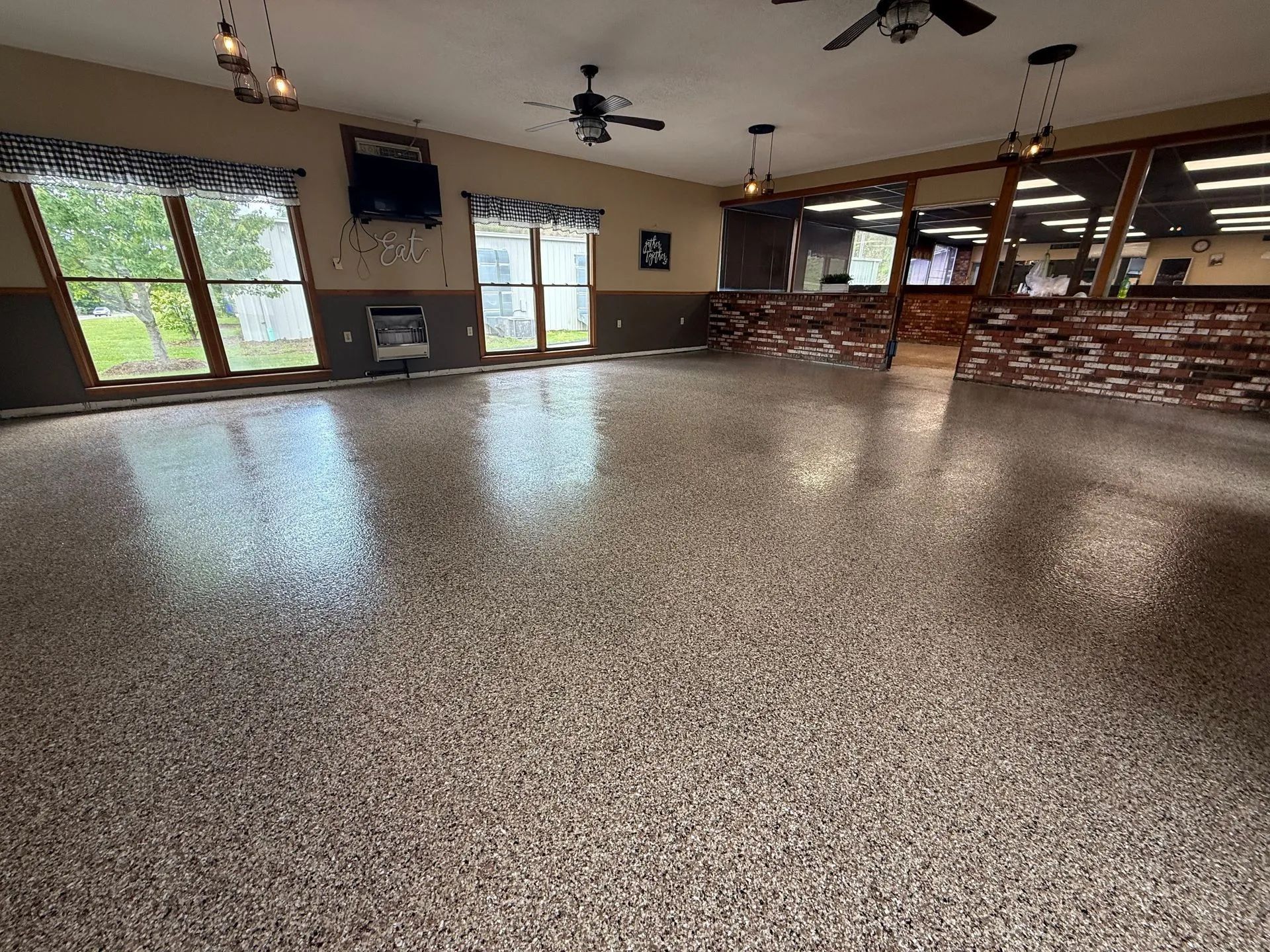
Both epoxy and polyaspartic can carry decorative flake broadcast into the wet coating, or a metallic pigment effect, or simply a solid color base. The decorative layer usually sits between the epoxy base and the polyaspartic topcoat, which means the topcoat is doing double duty — protecting the color and pattern underneath from UV fading and wear at the same time it's protecting the concrete. A garage with a metallic or flake finish that skips a UV-stable topcoat will lose its depth and shine noticeably faster than one with a full layered system.
Gloss Level and Slip Resistance
Higher gloss finishes show scratches and dust more readily, which matters in a working shop or a garage that doubles as a workspace. Adding a texture additive to the topcoat improves slip resistance for wet conditions — useful for a garage that sees a lot of rain runoff off vehicles in a Western North Carolina winter — without giving up the coating's protective qualities.
Cleaning and Upkeep
Both systems clean up with routine sweeping and occasional damp mopping, and neither should be scrubbed with harsh solvents that can dull the finish. Polyaspartic's added chemical resistance means it shrugs off oil drips, antifreeze, and de-icing salt tracked in during colder months a little better than epoxy alone, which is one more reason it's worth the extra step as a topcoat rather than treating it as optional.
Frequently Asked Questions
Can polyaspartic be applied directly to bare concrete without an epoxy base?
It can, but most installers avoid it for daily-use garage floors. Epoxy's slower cure gives it more time to bond into a properly ground surface, which is why it's typically used as the structural base layer rather than skipped in favor of polyaspartic alone.
Will either coating fix cracks or pitting in my slab?
No. Both are coatings, not structural repair materials. Cracks, pits, and spalled areas need to be patched and leveled before any coating goes on, or those flaws will reappear at the surface over time.
Does polyaspartic really resist hot tire pickup better than epoxy?
Yes. Polyaspartic's added flexibility and heat tolerance make it noticeably more resistant to the softening and lifting that can happen when a warm tire sits on a coated floor, which is one of the main reasons it's favored as a topcoat in daily-driver garages.
Choosing The Right Garage Floor Coating System
Epoxy and polyaspartic each bring different strengths to a garage floor, and the best-performing systems often use both rather than relying on one coating alone. Epoxy provides the strong bond and dependable foundation needed for properly prepared concrete, while polyaspartic adds UV stability, chemical resistance, flexibility, and a durable finished surface. For garages in Asheville, NC, where changing temperatures, humidity, vehicle traffic, and moisture can all affect a floor, matching the coating system to the slab and how the space is used makes a meaningful difference.
The condition of the concrete, the amount of sunlight and traffic, and the desired appearance all influence the final result. A well-prepared slab paired with the right combination of coatings can provide a smooth, attractive surface that is easier to maintain and better equipped for everyday wear. Iconic. Co LLC
brings 20+ years of experience serving homeowners and businesses in Asheville, NC, with coating systems selected around the specific demands of each floor rather than a one-size-fits-all approach.