Epoxy Flake vs Metallic vs Solid Color: Choosing a Look
Quick Answer: Flake epoxy broadcasts colored chips into a base coat for a granite-like, textured surface that hides stains and adds grip, making it the most forgiving choice for garages and shops. Metallic epoxy blends reflective pigments into the resin to create a fluid, three-dimensional finish that reads as a showroom feature, but it shows every flaw in the slab underneath and tends to be smoother underfoot. Solid color epoxy is a flat, uniform coating with no chips or pigment swirl, which makes wear patterns and repairs easy to spot but keeps the surface simple to match if you ever coat the space in phases. The right pick comes down to how the floor gets used, how much texture you want to live with, and how close to flawless the concrete is before coating begins.
You're standing over a garage slab ground down to bare, gray concrete, and the contractor hands you three sample boards. One's flecked with color chips. One swirls with a metallic sheen that looks almost liquid. One's flat and solid, nothing but color. Every board is technically "epoxy," and every one will shrug off tires, tools, and daily traffic without much complaint. The real difference shows up later, after the crew packs up and you're the one parking on it, dropping a wrench on it, living with it every single day. Picking between flake, metallic, and solid color has less to do with which one wins on looks and more to do with matching the finish to how the space actually gets used.
What Separates These Three Finishes at the Material Level
Flake Systems
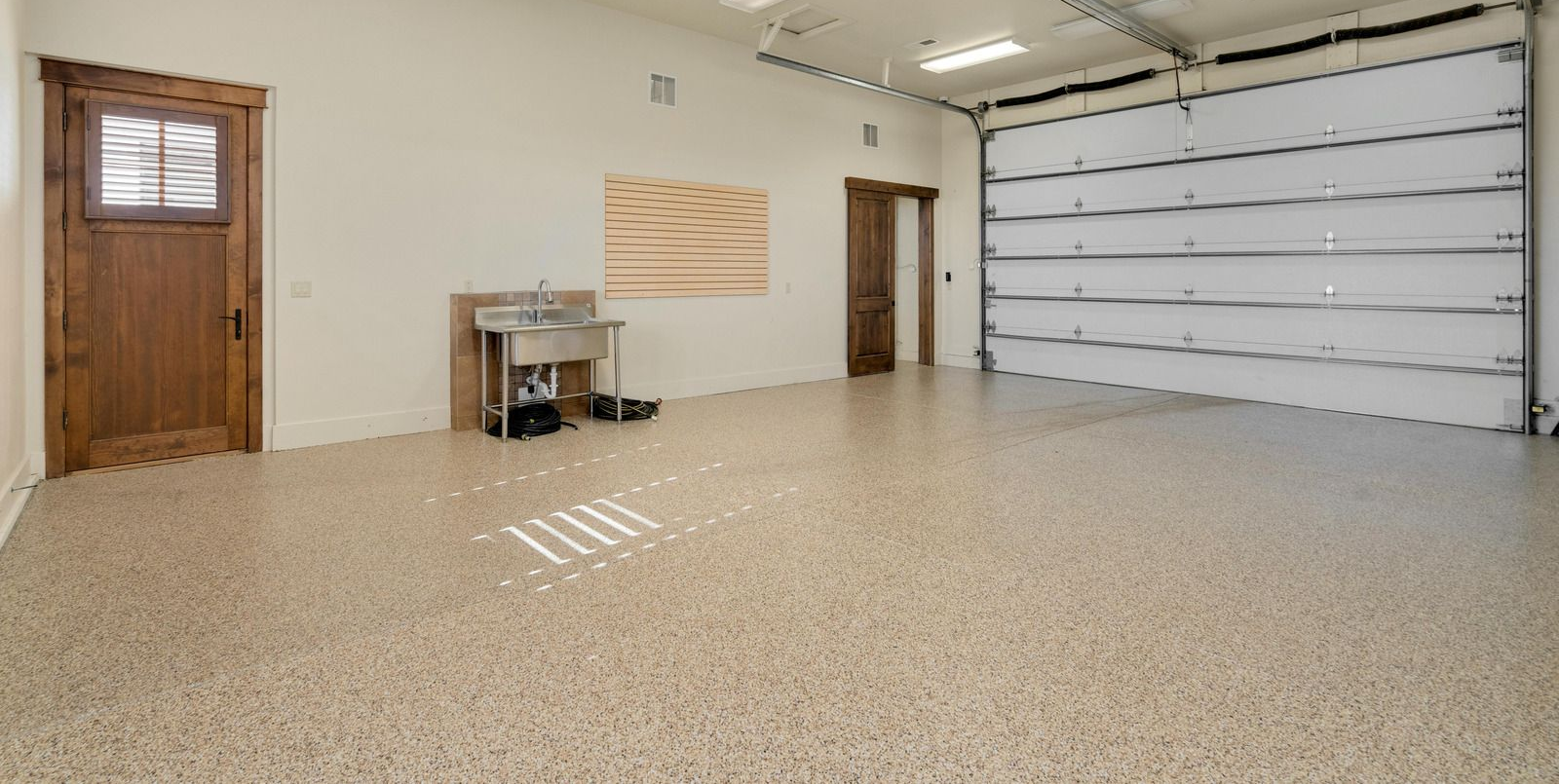
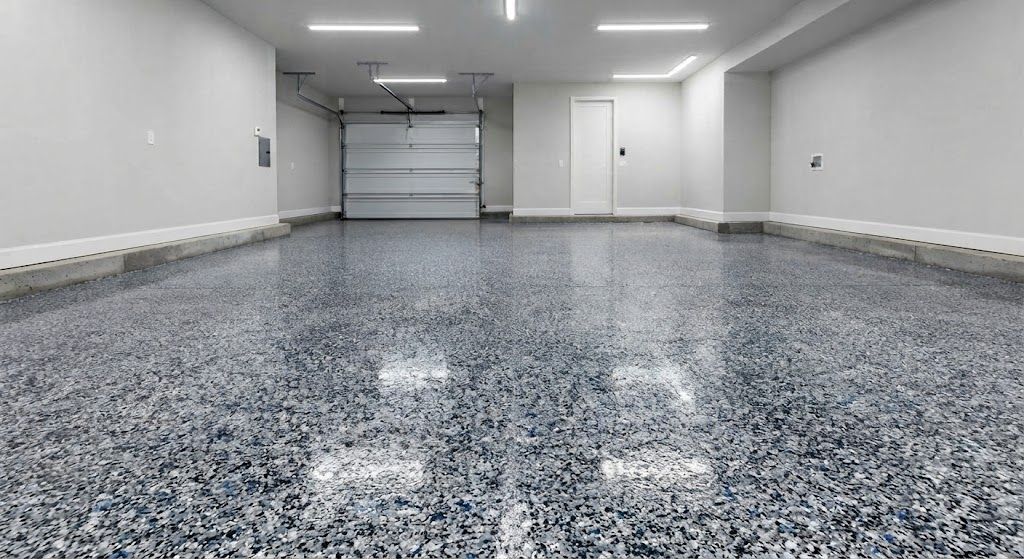
A base coat goes down. While still workable, colored vinyl or polymer chips get scattered across the surface, from light flecks to full coverage, before a clear topcoat seals everything. The finished appearance depends mainly on the flake blend used.
Metallic Systems
Metallic pigment gets mixed directly into the epoxy, then manipulated with tools, air, or extra resin during curing. That creates swirls, pooling, and visual depth across the floor. Temperature, humidity, and installer technique all influence the final appearance significantly.
Solid Color
Solid color uses a pigmented
epoxy layer applied evenly across the floor. There is no chip broadcast or pigment manipulation, making installation straightforward and predictable. The finished floor typically looks very close to the color shown on the sample provided beforehand.
How Each Finish Handles the Slab Underneath
This is where the choice starts to matter more than the color chart ever will.
Flake Hides Imperfections
The broadcast pattern breaks up the sightline across the floor, so old patch marks, minor repair lines, and small color variations in the concrete blend into the texture instead of standing out.
Metallic Does The Opposite — It Highlights Them
That high-gloss finish catches light across the whole surface, and anything uneven in the slab shows through the same way a scratch stands out more on a glossy car hood than a matte one. A slab going under metallic needs to be close to flawless before the coating goes on. That means more grinding, more crack repair, more leveling during prep, not less.
Solid Color Lands In Between
It won't hide flaws the way flake does, but it won't magnify them either, since there's no gloss-heavy pigment swirl pulling the eye across the surface.
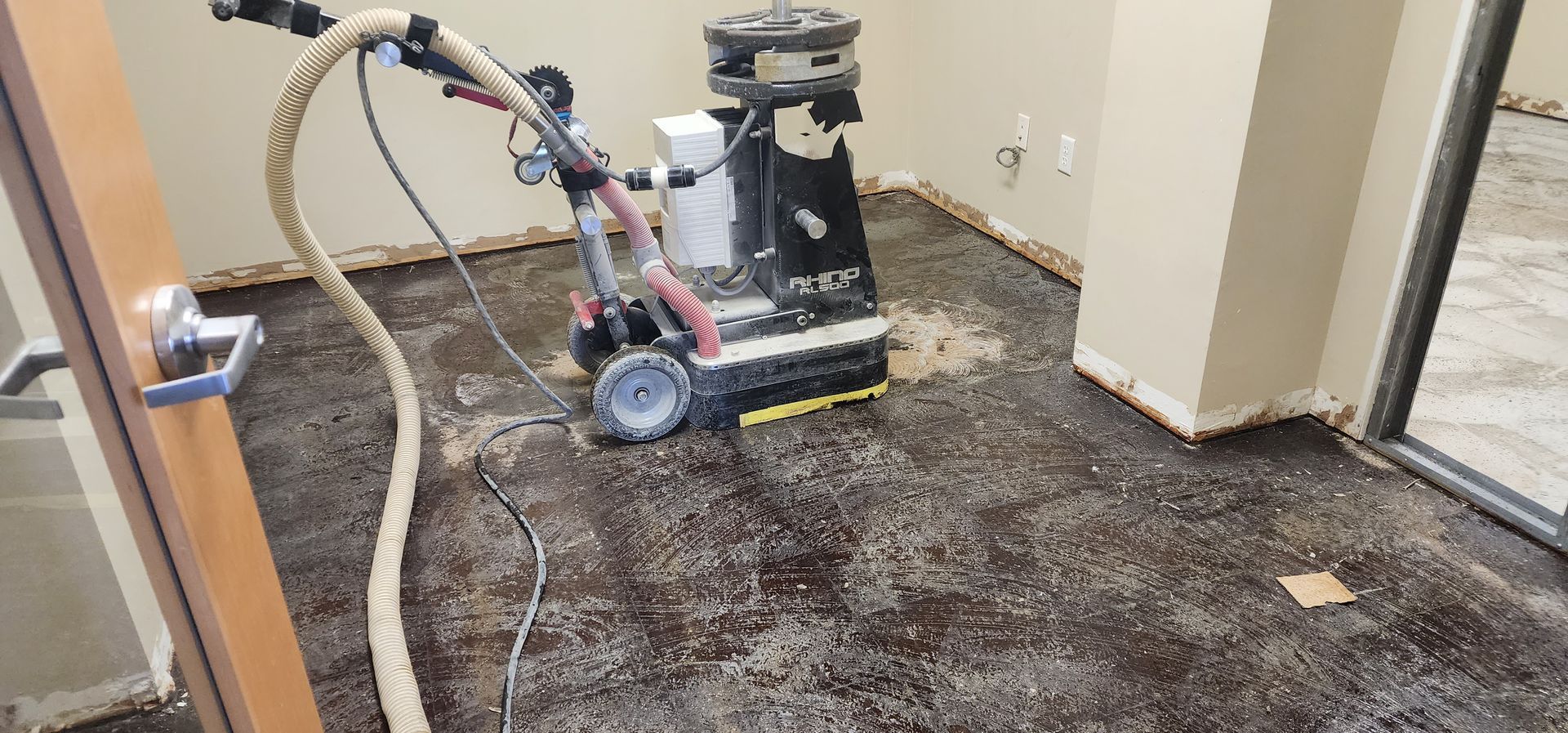
The flooring industry actually has standards for this. Concrete surface profile classifications rank how rough a slab needs to be ground, shot-blasted, or scarified before a coating will bond the way it's supposed to. A finish that shows every flaw simply asks for more of that prep work up front — which is exactly why a metallic floor and a flake floor poured over the identical slab can call for two different levels of attention before either one goes down.
Where Each Finish Performs Best Around a Home or Business
Flake Fits Garages, Shops, And High-Traffic Commercial Floors
Flake systems create durable working surfaces that handle dropped tools, rolling tires, and daily wear. They suit residential garages, retail backrooms, and light industrial spaces where performance matters most.
Metallic Fits Showrooms, Retail Floors, And Spaces Built To Be Seen
Metallic finishes work as design features rather than purely practical surfaces. They suit commercial showrooms, upscale garages, and interiors where dramatic flooring contributes to the overall appearance visitors notice.
Solid Color Fits Workshops And Floors Coated In Stages
Solid color is easiest to match when floors are coated in sections over time. Its uniform appearance also makes concentrated wear patterns easier to spot, helping identify areas needing attention first.
Traction and Slip Resistance Underfoot
Slip resistance is one of the more practical differences between these systems, and it doesn't split evenly.
Flake topcoats commonly include a slip-resistant additive blended right into the clear coat — the textured surface is already suited to it, and the grit doesn't interfere with the chip pattern underneath.
Metallic topcoats often skip that additive entirely, because a gritty or matte texture would dull the reflective, almost glass-like effect that makes metallic worth choosing in the first place. That trade-off means a smooth, high-gloss metallic floor can get noticeably slick when it's wet. It matters more in a garage that sees rain, snowmelt, or a hosed-down floor than it does in a climate-controlled showroom.
WARNING: A glossy metallic finish without a slip-resistant topcoat is not the floor to choose for a garage that regularly sees wet tires, hose-down cleaning, or Western North Carolina's freeze-thaw winters tracking snowmelt indoors. If metallic is the look you want in a space that gets wet, ask about a slip-resistant clear coat option before installation, not after someone slips on it.
Living With the Floor Day to Day
Maintenance looks different once the floor is actually in daily use.
Flake collects fine dust and debris in its texture. That's easy enough to sweep or blow out, but it does take a little more attention than a smooth surface if the space doubles as a home gym or a finished workshop where floor cleanliness actually matters.
Metallic and solid color both stay dust-free with less effort, since there's no chip texture to trap particles, though metallic's high gloss shows dust and smudges more visibly between cleanings simply because it reflects more light.
Touch-ups play out differently too. A chip or gouge in a flake floor blends into the existing broadcast pattern in a way that's hard to spot once it's fixed. A repair in a solid color or metallic floor is harder to hide — matching a flat tone, or recreating a pigment swirl exactly, is tougher than scattering in a few more chips. If a floor is likely to take hits over the years, a dropped tool, a moved piece of equipment, a bumper scraping the edge, that repairability is worth weighing right alongside the initial look.
Matching the Finish to How You'll Actually Use the Space
A few questions tend to sort this out faster than staring at sample boards ever will. Does the floor see water, snowmelt, or a regular hose-down? If so, slip resistance jumps to the top of the list, and that points toward flake. Is the concrete underneath rough, with old patches, cracks, or uneven color? Flake, and to a lesser degree solid color, forgive that kind of history better than metallic ever will. Is the space meant to be seen, a showroom, a display area, a garage built as an extension of the house? That's where metallic earns its premium. And will the floor need touch-ups down the road, or does it get used hard enough that repairs are likely? Flake's forgiving pattern makes future patchwork blend in far more easily than the other two.
TIP: Bring a sample board out to the actual space before deciding, and look at it under the lighting the floor will actually live under. A metallic swirl that looks dramatic under a showroom's overhead lighting can read flat and dull under a single garage bulb. Flake blends that look busy on a small chip sometimes calm right down once they're spread across a full slab, and the reverse happens just as often.
None of these three is the "wrong" choice on its own. Each one solves a different problem. The best-looking floor in someone else's garage isn't automatically the right fit for a different space with different traffic, different moisture, and a different job to do. What actually matters is being honest about how the floor will get used, then picking the finish built to handle that, not the one that photographed best in a showroom sample.
Frequently Asked Questions
Can flake and metallic epoxy be combined in the same space?
Yes, though it's less common than running one system throughout. Metallic often anchors a focal area like an entrance, while flake covers surrounding traffic zones. Plan the transition during installation.
Does epoxy flake or metallic show tire marks and hot tire pickup more?
Flake hides it better. The broadcast pattern breaks up the sightline, so hot tire pickup doesn't stand out against a glossy, reflective surface. That's why metallic favors showrooms over garages.
Is metallic epoxy too slippery for a garage floor?
It can be. Standard metallic finishes often skip the anti-slip additive to protect the glass-like effect, leaving the surface smoother and more prone to slickness when wet. Ask before installing.
Which finish is easiest to touch up after a chip or scratch?
Flake, by a wide margin. Extra chips blend into the existing pattern well enough that a repair is hard to spot. Matching a flat tone or pigment swirl is tougher.
Can solid color epoxy be applied over an existing epoxy floor?
Usually not without an inspection first. Any existing epoxy floor needs checking for adhesion, moisture, and condition before a new coat goes over it. Worn or delaminating floors need regrinding.
How do you decide between flake, metallic, or solid color for a commercial showroom?
It comes down to how much the floor draws attention versus simply performing. Metallic fits a showroom, since the floor becomes part of the visual presentation. Flake suits stockrooms better.
Choosing the Finish That Fits Your Floor
Sample boards look good under showroom lighting, but the test starts once the crew leaves and daily life takes over. Flake, metallic, and solid color can hold up for years when installed correctly, yet the difference shows in how each wears, hides damage, and handles moisture underfoot. A floor picked for looks alone can end up mismatched to a garage with wet tires, dropped tools, or heavy traffic, so weighing performance matters as much as the chip on the board.
Iconic. Co LLC
has spent more than 20
years finishing concrete floors across Asheville, NC, and that experience shapes how every project gets approached. Surface preparation is treated as the step that decides everything else, since flake, metallic, and solid color all perform differently depending on the slab underneath. Matching a finish to a garage, shop, or showroom comes down to honest use, not color charts, and that standard holds for every floor before a single coat goes down.